
How Many Visits Are Needed for a Dental Crown?
- 1. Why Dental Crowns Usually Require More Than One Visit
- 2. What Can Affect the Number of Appointments
- 3. The Role of Temporary Crowns
- 4. When a Crown Is Part of a Larger Treatment Plan
- 5. How Long Does Each Appointment Take?
- 6. After Your Crown Is Placed
- 7. Schedule Your Crown Consultation at Noble Dentistry of Chicago
- 8. Frequently Asked Questions
How Many Visits Are Needed for a Dental Crown?
If your dentist has told you that you need a dental crown, one of the first things you might wonder is how much time you will need to set aside. It is a reasonable question – life is busy, and knowing what kind of commitment is involved helps you plan. The honest answer is that it depends on a few factors specific to your situation, but most patients are looking at two appointments, typically spaced two to three weeks apart.
At Noble Dentistry of Chicago, Dr. Jared Siegel takes the time to walk patients through the full process before anything begins, so there are no surprises along the way. Here is what the crown process generally looks like and what influences the number of visits you might need.
Why Dental Crowns Usually Require More Than One Visit
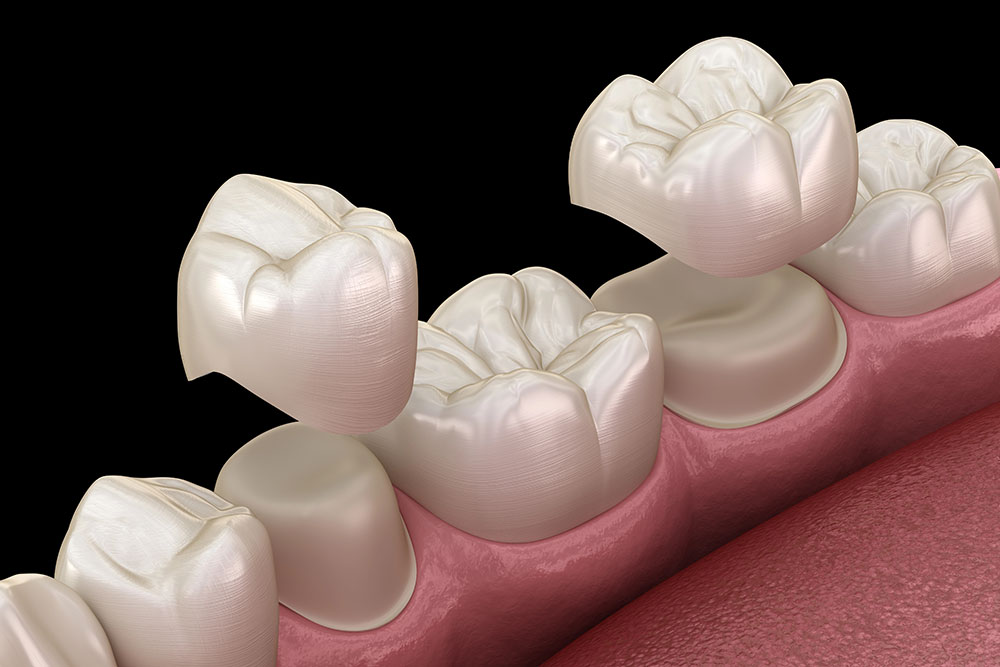
A dental crown is a custom restoration – a cap that fits over a tooth to protect it, restore its shape, and bring it back to full function. Because it is made to match the specific dimensions and color of your natural teeth, it cannot simply be placed on the spot. There is a preparation and fabrication process involved, and that is what typically creates the need for more than one appointment.
The traditional approach involves two visits: one to prepare the tooth and take impressions, and a second to place the permanent crown once it has been fabricated by a dental laboratory. In between, patients usually wear a temporary crown to protect the tooth while waiting. The lab process generally takes one to three weeks, which is why there is a gap between appointments.
What Can Affect the Number of Appointments
While two visits is the most common scenario, a few factors can shift the timeline in either direction.
If the tooth receiving the crown has had significant decay or structural damage, additional work may be needed before the crown can be placed. For example, a tooth that has decay extending into the pulp may require a root canal before a crown is appropriate. In that case, the root canal treatment would add one or more visits before the crown process begins. Similarly, if a tooth is too compromised to support a crown without additional build-up material, that preparation adds a step.
The location of the tooth and the materials used for the crown can also play a role. Crowns on back teeth that absorb the most chewing pressure are sometimes approached differently than those on front teeth. And while most crowns are sent to an outside laboratory for fabrication, some dental offices use in-office milling technology that can produce a crown in a single day – meaning some patients may only need one visit, depending on the equipment available and the complexity of the case.
When patients come to Noble Dentistry of Chicago for a crown consultation, Dr. Siegel reviews the full clinical picture – including X-rays and the condition of the surrounding teeth – before outlining a realistic timeline.
The Role of Temporary Crowns
Between the preparation appointment and the placement of the permanent crown, most patients wear a temporary crown. This serves a few purposes: it protects the tooth that has been shaped and prepared, maintains the spacing so neighboring teeth do not shift, and allows the patient to continue eating and speaking normally while waiting.
Temporary crowns are not designed for long-term wear. They are typically made from a softer material and are secured with temporary cement, which means they can occasionally come loose. If that happens, it is worth contacting the office promptly so the tooth does not go unprotected for an extended period. In most cases this is an easy fix, but it is not something to ignore.
When a Crown Is Part of a Larger Treatment Plan
Crowns are versatile restorations. They are used in a range of situations – after root canal therapy, to restore a severely broken or worn tooth, to cover a dental implant, or as part of a dental bridge that replaces a missing tooth. When a crown is part of a broader treatment plan, the total number of appointments will naturally reflect all the components involved, not just the crown itself.
This is why a thorough examination matters before any estimate is given. The number of visits required for a crown placed on an otherwise healthy tooth is a very different proposition from one that involves preliminary treatment. Dr. Siegel will always be clear about what the full plan involves and how many appointments to expect before any work begins.
How Long Does Each Appointment Take?
The first appointment – where the tooth is prepared and impressions are taken – typically runs between one and two hours, depending on the complexity of the case and whether any additional preparation is needed. The second appointment, when the permanent crown is fitted and cemented, is usually shorter, often around an hour or less.
Most patients find the process more manageable than they expected. Local anesthesia is used to keep you comfortable during the preparation appointment, and by the time the permanent crown is placed, there is generally no discomfort involved at all. If you have concerns about dental anxiety, that is worth mentioning to Dr. Siegel before your first visit – the team at Noble Dentistry of Chicago can work with you to make the experience as comfortable as possible.
After Your Crown Is Placed
Once the permanent crown is in, most patients adjust to it quickly. There may be some mild sensitivity in the first few days, which is normal as the tooth settles. Caring for a crown is straightforward – regular brushing, flossing, and routine dental checkups are all that is needed to keep it in good shape. With proper care, a well-placed crown can last well over a decade.
One thing worth noting: a crown protects the restored tooth, but the surrounding gum and bone still need attention. Maintaining consistent oral hygiene habits and keeping up with professional cleanings helps protect not just the crown, but the health of your entire mouth.
Schedule Your Crown Consultation at Noble Dentistry of Chicago
If you have been told you need a dental crown – or you have a tooth that has been bothering you and want to find out what is going on – Noble Dentistry of Chicago is here to help. Dr. Jared Siegel will examine your tooth, explain what he finds, and give you a clear picture of what treatment involves before anything is decided.
We are located at 3052 N Lincoln Ave, Chicago, Illinois 60657. Our office is open Monday from 10:00 AM to 7:00 PM, Tuesday through Thursday from 9:00 AM to 5:00 PM, and Saturday by appointment. Call us at (773) 997-1979 to book your visit, or explore our full range of dental services online. We look forward to helping you get the care you need.
Frequently Asked Questions
In some cases, yes. Certain dental offices use same-day milling technology that can fabricate and place a crown in a single appointment. However, this depends on the equipment available and whether the clinical situation is suitable for that approach. The traditional process involves two visits with a laboratory fabrication period in between.
Contact your dental office as soon as possible. A temporary crown is there to protect the prepared tooth, so leaving it uncovered for an extended period is not ideal. The office can usually see you quickly to re-cement it.
Not necessarily, but it is recommended in most cases. Teeth that have undergone root canal therapy can become more brittle over time, and a crown helps protect against fracture. Your dentist will advise you based on the specific tooth and its condition.
Some sensitivity around the prepared tooth is normal while wearing a temporary crown, particularly to temperature or pressure. This is usually mild and temporary. If you experience significant or worsening discomfort, reach out to the office – it is always better to check.
A crown is typically recommended when a tooth has extensive decay, a significant crack, or has been weakened to the point where a filling alone would not provide adequate protection. The best way to know for certain is through an examination and X-rays, which allow Dr. Siegel to assess the tooth’s condition and discuss your options clearly.
Disclaimer
This content is intended for general informational purposes only and does not constitute medical or dental advice. Every patient’s situation is unique, and treatment experiences may vary. Please consult with a qualified dental professional for guidance specific to your individual needs and circumstances.


